Detail
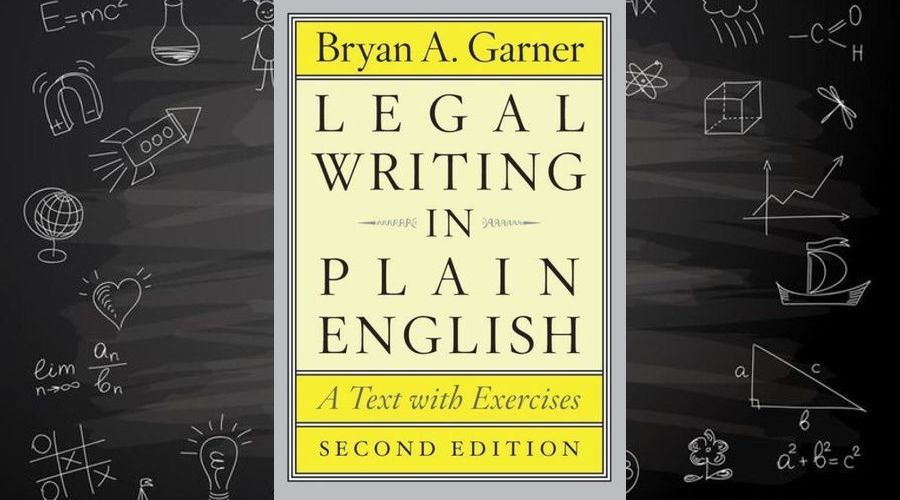
LEGAL WRITING IN PLAIN ENGLISH
This book takes a practical approach to legal writing. It derives from my experience over the past several decades in working with law students and—in far greater numbers—practicing lawyers and judges. So the book is intended not just for law students and paralegals but also for practitioners—even experienced ones. In devising the exercises for each section, I envisioned either a writing class or an informal group of legal writers who meet periodically to work through the book.
Particularly in its approach to exercises, the book differs markedly from other legal-writing texts. Each of the 50 sections contains a basic, an intermediate, and an advanced exercise. (Model answers for the basic exercises are in the back of the book.) Some of these exercises are open-ended, requiring you to supply examples of particular writing problems. This simply means that you’ll have to pay some attention to style in your legal reading. Other exercises require you to research the literature on effective writing. Why? Because as professional writers, lawyers should know this literature. After all, workaday questions about writing are generally much easier to answer than the legal questions that arise in practicing law. If you worry about points of grammar and usage, see § 48. Better yet, make friends with the nearest librarian. Librarians are there to help you, and they’re generally eager to do it.
The book’s organization reflects the different types of writing that lawyers do. Some techniques apply to virtually all legal writing (§§ 1–20). Others apply
mostly—though not quite exclusively—to analytical and persuasive writing (§§21–30). Still others apply mostly to transactional drafting (§§ 31–40), though
these techniques also address problems that occasionally arise in the other types of legal writing. Then there are two other groupings of techniques: those that lead to readable typography (§§ 41–45) and those that lead to ongoing improvement (§§ 46–50).
Much of the advice in this book depends on—and even promotes—sound legal analysis. That might not be what people expect from a book on legal writing. Yet many sections are essentially about thinking straight. This is crucial, since it’s impossible to separate good writing from clear thinking.
Here you’ll find discussed and illustrated the primary techniques for improving your writing style. Some sections will serve only as reminders of what you’ve heard before but perhaps forgotten. Other techniques will probably be new to you. What matters most, in the end, is how you apply sound practices in your writing. You’ll have to use good judgment. No blackletter rule can substitute for that.
Finally, a word about “plain English.” The phrase certainly shouldn’t connote drab and dreary language. Actually, plain English is typically quite interesting to read. It’s robust and direct—the opposite of gaudy, pretentious language. You achieve plain English when you use the simplest, most straightforward way of expressing an idea. You can still choose interesting
words. But you’ll avoid fancy ones that have everyday replacements meaning precisely the same thing.
著者
BRYAN A. GARNER
出版商
The University of Chicago Press
优惠价: 9元(电子书无运费通过下载交付)
分类
最新资料

1. THE FORMATION OF A CONTRACT

2. BOILERPLATE CLAUSES IN COMMERCIAL CONTRACTS

3. THE LIABILITY OF BUSINESSES FOR NEGLIGENCE

4. SOLE TRADERS AND TRADITIONAL PARTNERSHIPS

5. CONTRACTUAL WARRANTIES

6. THE LIABILITY OF BUSINESSES FOR NUISANCE

7. DAMAGES AS A REMEDY FOR BREACH

8. PAYMENT CLAUSES AND RETENTION OF TITLE

9. AN INTRODUCTION TO LIMITED COMPANIES

10. THE STRUCTURE OF A COMMERCIAL CONTRACT